 Most organizations know when something has gone wrong. The best organizations know before it does. That is the difference work order reporting makes. When your data is live, your decisions are faster, your team is more accountable, and your operation runs with a level of control that reactive management simply cannot match. A good work order system puts that capability directly in your hands.
What Is Work Order Reporting?
Work order reporting is the process of capturing, measuring, and presenting data from your work orders to give managers a clear and accurate picture of operational performance. It goes beyond simply knowing which jobs are open or closed. Effective work order reporting tells you how long jobs are taking, which technicians are performing well, where bottlenecks are forming, and whether your team is meeting the standards your business and your clients expect. Without it, managers are left making decisions based on incomplete information, which is rarely a recipe for consistent results.With a good work order system, work order reporting is not something you run at the end of the month to review what happened. It is a live, always-on view of your operation that empowers your team to act with confidence every single day.
Why Work Order Live Stats Change Everything for the Better
Static reports have a fundamental problem: by the time you read them, the information is already out of date. A job that was on track yesterday may have stalled this morning, and without live work order reporting, no one knows until a deadline is missed or a client follows up.Live stats solve this by giving managers a real-time view of what is happening across their entire operation at any given moment. A work order system that surfaces this data automatically means you are never left waiting for someone to compile a spreadsheet or chase down a status update. The numbers update as jobs progress, giving you an accurate and current picture of performance without any manual effort.
Live Job Status Stats
Live job status visibility is one of the most important elements of effective work order reporting. Every work order carries a current status, whether that is pending, assigned, in progress, on hold, or completed, and those statuses update in real time as technicians work through their jobs. Managers can view the full picture at a glance, filtering by site, team, job type, or date range to focus on exactly what matters most at any given moment. This level of visibility removes the need for manual check-ins and ensures that nothing moves slowly in the background without someone noticing.Job Completion Rate Reporting
Understanding how many jobs your team is completing, and how consistently they are hitting deadlines, is one of the most valuable insights work order reporting can deliver. A work order system tracks job completion rates over time, giving you a clear view of throughput and helping you identify whether your team's capacity matches the volume of work coming in. When completion rates drop, the data tells you immediately, so you can investigate the cause and respond before it becomes a pattern. When performance is strong, you have the evidence to recognize it and build on it.Overdue Work Order Alerts
Overdue jobs are one of the most common sources of client dissatisfaction and internal frustration. Strong work order reporting includes automatic overdue alerts that monitor every open work order against its due date, so nothing slips past unnoticed. Managers receive timely notifications when jobs have not progressed as expected, allowing them to intervene early, reassign work if needed, and keep clients informed rather than surprised. This proactive approach to deadline management protects your reputation and keeps your team focused on what needs attention most.Technician Performance Reports
 Your people are your greatest operational asset, and work order reporting gives you an objective view of how each technician is performing. Individual performance reports show how many jobs each technician has completed, how quickly they are working, and whether they are consistently meeting deadlines. This data takes the guesswork out of performance conversations, giving managers a fair and evidence-based foundation for feedback, recognition, and workforce planning. Over time, these reports reveal patterns that help you develop your team and allocate work more strategically.
Custom Reporting Dashboards
Every organization has different priorities, and a one-size-fits-all report rarely tells the full story. Good work order reporting allows you to build custom dashboards that surface the metrics most relevant to your business, whether that is performance by site, job type, department, or time period. Dashboards can be configured to give senior leaders a high-level overview while providing operational managers with the granular detail they need to make day-to-day decisions. The result is a work order reporting environment that works the way your business works, not the other way around.Why Today's Businesses Need Efficient Work Order Reporting
Work order reporting is not just an internal management tool. It is a commercial asset. When you can demonstrate to clients that your team is meeting deadlines, resolving issues promptly, and maintaining consistent standards, you are building the kind of credibility that wins long-term contracts and strengthens partnerships. Accurate, accessible work order reporting gives you the data to back up every conversation with evidence, turning operational performance into a genuine point of difference in a competitive market.Choosing the Right Work Order Reporting Software
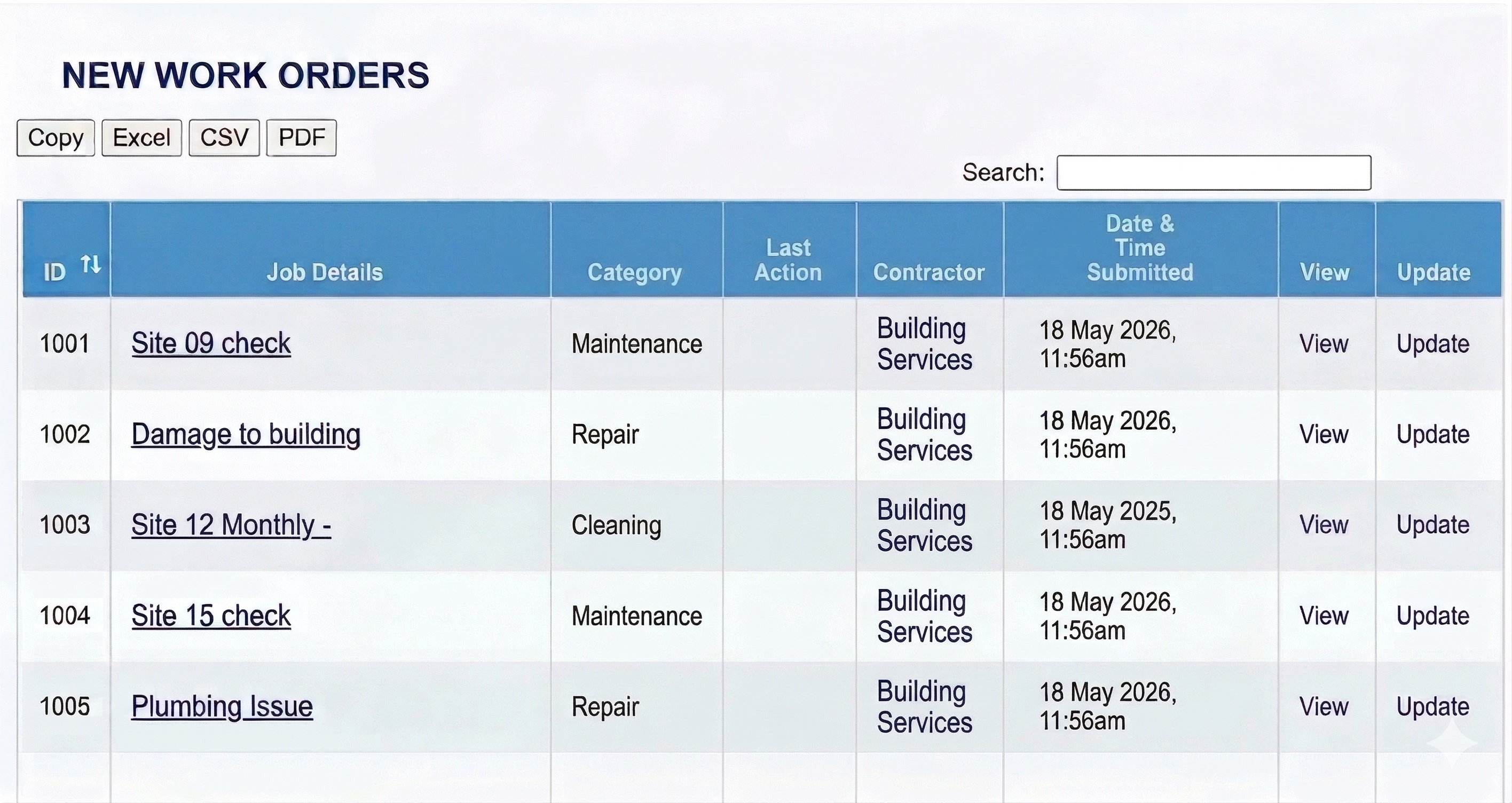 The right work order reporting solution should give you clarity without complexity. Our system, Work Order, is designed to make powerful reporting accessible to every member of your team, from field managers reviewing daily performance to executives tracking organization-wide trends. Live stats, automated alerts, technician reports, and custom dashboards are all built into the platform, with no complicated setup or technical expertise required.
The Work Order mobile app keeps reporting connected to where the work actually happens. Technicians update jobs in the field, and those updates feed directly into your work order reporting in real time. There is no lag, no data entry backlog, and no version of the truth that differs between the office and the ground.
If your current system leaves you relying on manual reports, chasing status updates, or discovering problems after they have already cost you time and money, Work Order is built to change that. Get in touch today to see how live work order reporting can transform the way your team operates.
Discover our Work Order System
Explore our platform